Friday, September 6, 2013

Mary MacLane: A Correct Reflection of a Peculiar Woman

mary maclane

Mary MacLane had been causing a stir for nearly 20 years by the time she joined the ranks at Essanay, and the sensation she caused helped bring the studio new attention. Unfortunately, the product of their partnership has been lost to time.

MacLane startled readers and publishers alike when she published her diary in 1902 at the age of 19. Her honesty about her love life and experiences intrigued and astounded readers and critics alike. As one newspaper wrote of “The Story of Mary MacLane,” “she ran the gamut of egoism and penitence. She was, according to her, the most beautiful as well as the ugliest girl in the world and on that range of arpeggios she strummed her symphony of life and its overtones.”

But after a while, MacLane’s popularity waned. She occasionally made headlines due to her eccentric and often erratic behavior. On at least one occasion, she disappeared without a trace, only to resurface days later. For the most part, though, she failed to do anything considered newsworthy. Then, in 1917, she published “I, Mary MacLane” and found herself back in the spotlight, and back in demand. Seeing an opportunity, Essanay co-founder George K. Spoor approached MacLane with the idea of turning some of her memoirs and life story into a film.

Mary MacLane with director Arthur Berthelet

It seemed a natural fit. MacLane’s memoirs already read like a vamp’s tale, and she had a great deal of publicity and controversy already surrounding her. As she detailed in an essay for Photoplay, her new role sounded like one she had simply fallen into: “Without effort, without volition, without, in short, wanting to, I -- I have become a ‘film star.’” MacLane agreed to the project and the seeds of “Men Who Have Made Love to Me” were planted. In December of 1917, Essanay announced it had secured MacLane as its next star, and emphasized the fact that no expense would be spared during the filming. Under Arthur Berthelet’s direction, the luxurious apartments described in her affairs would be recreated in painstaking detail, and MacLane herself would be dressed in the most beautiful gowns (no doubt, a decision intended to bring more women to the theaters, much like the tactic the studio employed with “The Strange Case of Mary Page”). Not only that, Spoor would expand his usual marketing plan to reflect this “ultra feature.” He rented billboards in more than 20 cities across the country, sent special sheets to national newspapers and magazines, and even outfitted Chicago buses with placards advertising the film.

But upon its release in February of 1918, the film got mixed reviews. Some critics noted that it was a “correct reflection of the peculiar woman” and that it would satisfy viewers’ curiosity about MacLane, but they were sure to emphasize that it “adds nothing to to the artistic achievement of pictures.” Motion Picture Magazine referred to it as a “visualized diary” and a “Hooverized love-feast” but “not dramatic entertainment.”

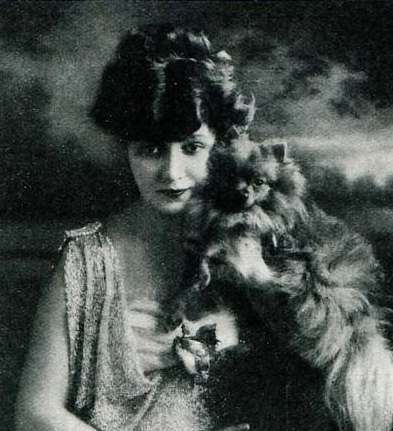
Mary MacLane
Scene from "Men Who Have Made Love to Me"

In fact, the film, which followed six of MacLane’s affairs, wasn’t as scandalous as MacLane’s works had been, or current vamp films starring the likes of Theda Bara were. Some critics even said it was prudish compared to popular vamps of the screen. Although the film itself may not have been much to write home about, MacLane’s erratic behavior certainly was. While the film was still in theaters, MacLane once again disappeared, leaving behind only a few belongings in her hotel room. She reappeared days later and revealed that she had checked into another hotel room under an assumed name. She had wanted to get away from the media attention and cover the “financial embarrassment” she felt (she was prone to overspending and her addiction to luxury caused her to lose money as quickly as she earned it).

MacLane was almost entirely out of the spotlight when she was arrested at her Chicago home in July of 1919. Alla Ripley, a designer, brought charges against MacLane after the gowns she designed for "Men Who Have Made Love to Me" disappeared without being paid for. At the time she was arrested, the papers said she only had 85 cents to her name.

Mary MacLane

MacLane never returned to the screen, and a decade later was found dead in her Chicago hotel room at the age of 48. She was penniless, and had succumbed to tuberculosis, a disease that had also claimed Marie Bashkirtseff -- a French writer to whom MacLane was often compared. Although MacLane’s published works have lived on and have been reprinted for new generations, the film, like so many other Essanay works, is considered lost.

Mary MacLane

Explore other Essanay stars through past blog posts, or take a quick look at the history of film in Chicago here.

Thursday, August 22, 2013

Vedah Bertram: A Career Cut Short

Vedah Bertram

The death of Essanay star Vedah Bertram marks one of the earliest tragedies the film industry had to deal with. When she died at just 20 years old, she had already traveled across the country to follow her dream and had managed to hold her own on the screen with the likes of Broncho Billy himself, G.M. Anderson. But because she had been disowned by her father, she was forced to keep her real identity a secret until just before her untimely death.

Born to Jennie and Jerome Buck in New York in December 1891, Bertram’s real name was Adele Buck. In a few short years, Jerome would become a respected journalist in the Boston and New York areas, and a well respected member of high society, but by 1900 the couple had split. By that time, Adele was living with her mother, brother, grandmother and step-grandfather, and by 1910, her mother and father were both completely out of the picture. Her father remarried, but her mother appears to have died between 1900 and 1910, leaving Adele and her younger brother Jerome Jr. to be raised by their grandparents. She was educated at Wellesley College, where she graduated in 1911, and it was at Wellesley where she discovered her love of theater.

She took to the stage against her family’s wishes, and instead lived with her fiance’s family, the Merrills, while she pursued work on the stage. It was during this time that she was discovered by G.M. Anderson, co-founder of the Essanay Film Manufacturing Company. Despite being new to the world of film, she greatly impressed him and he hired her to join the Western studio and star alongside him in his Broncho Billy films. She accepted and she and her fiance, L.H. Merrill, moved west to Niles, California to begin anew. She changed her name to Vedah Bertram and kept her true identity secret to avoid being linked back to her family.

Essanay ad

Anderson was soon gushing to the fan magazines about his “find,” and the reporters took to Bertram, too. They admired her personality, her athleticism and her clever acting ability. She made her debut in “The Ranch Girl’s Mistake,” released in March of 1912, and became an instant favorite among film-goers. She only had a few films under her belt, when she was admitted to the hospital in April due to a severe illness, but her absence from the screen was noticed by fans and reporters alike. The Moving Picture World noted she had “a warm place in the hearts of film lovers for her talent and beauty,” and all were relieved when she recovered the following month and returned to pictures in “The Desert Sweetheart.”

Although she continued to make films, she was in poor health, and by August she once again fell severely ill. The Spokane Daily Chronicle reported that she had suffered a breakdown shortly before being stricken with appendicitis. As her condition worsened, she was rushed into surgery at Samuel Merritt Hospital in Oakland. Before going under the knife, she revealed her real name and her family, telling hospital staff that they were only to contact her family if she didn’t survive. As her condition became critical, fan magazines raved about her most recent performance in “Broncho Billy’s Last Hold-Up” where she, ironically, comforted a dying Broncho Billy in his final moments. “Vedah is forceful, crafty and altogether charming,” the Moving Picture World noted, and held out hope that she would one day return to the screen.

Broncho Billy's Last Hold Up, featuring Vedah Bertram
Scene from "Broncho Billy's Last Hold-Up," featuring Vedah Bertram

Unfortunately, “Broncho Billy’s Last Hold-Up” would be one of her final performances. She died August 26, 1912 at the age of 20, and was mourned by the film industry and film-going public alike. Her father and brother were notified of her death via telegram, and Merrill took her body back to the East coast to be buried in Sheepshead, New York. Her final film “Broncho Billy Outwitted” was released posthumously, and fan magazines all over the country declared her one of the cleverest actresses the motion picture world had known.

Vedah Bertram

For weeks following her death, fans sent letters and verses in her honor to fan magazines which were reportedly forwarded on to her family. One fan, cited only as W.F.B., told Motion Picture Story Magazine that they were still watching Bertram’s films. The editor simply replied, “Glad that you still see pictures with Vedah Bertram in them. Life is short, and art is long.”


Tuesday, August 6, 2013

Peerless Annabelle: A Symphony in Yellow Hair

Annabelle Whitford

On her 80th birthday, Annabelle Whitford was on top of the world. She'd received jams, jellies, flowers, phone calls and telegrams from well-wishers across the country, and had entertained several photographers and reporters who had come to call, all within her small Chicago apartment. It was quite the change from the birthday Whitford thought she would have just a day prior, when the recently widowed former Follies girl felt as though she had been forgotten by the rest of the world. She felt lonely and hopeless, despite being, at one time, one of the best-known dancers in the country.

Annabelle Moore Whitford was born July 6, 1878 to Amanda Moore in Chicago, Illinois. Annabelle's biological father was out of the picture, but it didn't really matter. She and her mother were inseparable, and by the time she was in her teens, her mother had remarried. According to Annabelle, she was on stage by the time she was 11, and began to make a name for herself as a dancer. Her signature dances soon became the Serpentine, the Butterfly and the Sun Dances, and she soon became so well known (particularly in New York), that she was invited by Thomas Edison to be one of his first subjects to be recorded with the Kinetoscope. Edison's films of her dances became so popular, that she was invited back to the Black Maria to record new performances to make up for the prints that had worn out. Thanks to her growing popularity, she was also chosen to perform at the World's Columbian Exposition (aka the Chicago World's Fair) just months shy of her 15th birthday.

Annabelle Whitford

Although her performance at the fair would help boost her popularity even further, she soon found herself in the midst of one of the highest profile scandals to hit 19th century New York. In December 1896, Annabelle said she was approached by agent James H. Phipps to perform at a bachelor party being held by Herbert Seeley, grandson of P.T. Barnum, for his brother. Although Annabelle initially accepted the offer, Phipps told her to dance for the men without her tights. She was insulted, and although he later said she could wear her tights, she refused and told her stepfather, theatrical agent William S. Moore, about the incident. He reported the incident to the police who then raided the banquet where "muscle" dancer Ashea Wabe was performing. Although she wasn't nude at the time of her arrest, Wabe later admitted that she'd been asked to perform nude and that she fully intended to. The trial that resulted from the raid stemmed from public indecency, but because of the stature of the men involved, there was backlash against the police and Annabelle's stepfather. Annabelle herself testified during the trial, and had her testimony refuted by others, but her stepfather ultimately paid the price. On January 17, 1897, Moore died of pneumonia at just the age of 52. His doctor claimed that the notoriety the trial had brought him hastened his death.

In the end, the scandal did little to hurt Annabelle's career. She returned to the stage, pursued drama for a couple of years, and then made the transition into musical comedy where she again began to make a name for herself. She appeared in productions like The Sprightly Romance of Marsac and The Sleeping Beauty and the Beast, before joining Eddie Foy in a production of Mr. Bluebeard in 1903. Although the show was well-received, its run ended in tragedy. On December 30, the company was preparing to end its run at the beautiful Iroquois Theatre in Chicago. The theater was packed well beyond capacity -- 2,000 audience members were estimated in attendance and many of them were children. At the beginning of the second act, an arc light shorted out, causing a curtain to catch fire. A stagehand attempted to douse the fire, but it was no use. The scenery and stage were soon in flames. Foy remained on stage trying to calm patrons as they attempted to escape. Some patrons were trampled by fellow audience members, doors failed to open, and other patrons were trapped in dead ends. Annabelle escaped, but was injured and admitted to a local hospital. Others were not so lucky. An estimated 575 people died the day of the blaze with dozens more dying in the following days. It was an event that Annabelle would never forget, and she would often participate in memorial services marking the anniversary of the tragedy in later years.

Scene from the Ziegfeld Follies of 1908

Annabelle's career was about to take yet another turn. Her roles in musical comedies, and her figure, soon got the attention of Flo Ziegfeld himself, and she joined the Follies of 1907. During her run with the Follies, she became a living version of many of the idealized "girl" types of the early 20th century. She often played the Gibson girl, the Christy girl and the Brinkley girl, and sang on stage. She was dubbed one of the most beautiful follies girls ever known, but only remained with the company for three seasons before embarking on her own vaudeville tour. Her career came to an abrupt end, though, when she married Edward J. Buchan, a stage electrician who would later become a surgeon. She retired from the stage and the screen, but continued to be very involved in the Chicago community. She was on the board of the Salvation Army and a member of the Women's War Relief Association.

She also continued to pursue her love for the stage, albeit vicariously. In 1939 she created a Follies-esque review featuring 40 grandmothers and great-grandmothers. Annabelle directed the cast, and the show included musical acts, skits and even a revamped version of the Brinkley girl routine from 30 years prior. Although the beauty Annabelle had embodied was now out of fashion, she didn't hesitate to speak her mind about the new generations' glamour girls. “The Gibson girl didn’t have to have a ‘mask’ of cosmetics, or a scanty costume to be admired; yesteryear’s belle had real beauty.” Even though she was in her 60s, she still only used cosmetics sparingly.

Members of the Women's War Relief Association
Members of the Women's War Relief Association: Mrs. Edward J. Buchan (Annabelle Whitford Buchan), Mrs. Norval H. Pierce (nee Drucilla Wahl), Mrs. Edward R. Fifield and Mrs. William M. Hight

Annabelle and her husband had a lived a comfortable life together in a spacious home, but it soon slipped through their fingers. She lamented in an 1945 interview that when she agreed to be filmed by Edison she made a terrible mistake. “It was at this time that I made the greatest mistake of my life. For my performance, Mr. Edison offered me my choice of $15 or an interest in his new invention. I took the cash.” She lamented that a colleague had taken the offer of interest and was now a millionaire. Had she made a similar choice, her final years may have been happier. By the '50s, the couple was living off of a government pension of just $114 a month (she had earned $750 a week when she was with the Follies). When she was given the opportunity to pen a remembrance of the tragic Iroquois blaze, Annabelle donated the $900 check she received to a charity for underprivileged Chicago youth. When her donation was discovered, the couple was dropped from the pension program, and the charity was forced to return what was left of the donation, about $480, to the Buchans to live off of until they could reapply for the pension program. At one point, their small apartment didn't even have heat.

Shortly thereafter, Edward died, leaving Annabelle a penniless widow. As her 80th birthday approached, newspapers remembered the star who had fallen on hard times, and interviewed her. “No one comes to see me. it would be wonderful to hear from someone -- anyone, particularly on my birthday,” she told them, and people everywhere responded. Her apartment at 2401 W. Diversey was soon buzzing with activity, and reporters who showed up the day of the celebration were greeted with a joyful Annabelle. “Oh, the telegrams! The letters and telegrams! The reporters! My room is a bower of roses. And look! All kinds of jams and jellies. A Chicago woman brought them. Oh, what a day!”

Annabelle Whitford

Although her 80th birthday was a shining moment, it didn't change her impoverished state. She died November 29, 1961 at Augustana Hospital at the age of 83.

Annabelle Whitford

A reporter covering the Seeley Scandal once described her as a symphony in yellow hair, and thanks to surviving Edison negatives, we can still watch this symphony in all of her beauty. Watch excerpts from her Butterfly and Serpentine dances below.

Serpentine Dances, the American Short film by William Heise

Flash 10.2 or above required

To view films, please download Flash.
If you have an iPad or iPhone download Fandor from the App Store.


Annabelle Butterfly Dance, the American Silent Documentary by William K.L. Dickson and William Heise

Flash 10.2 or above required

To view films, please download Flash.
If you have an iPad or iPhone download Fandor from the App Store.


Wednesday, July 31, 2013

Edna Mayo: The Best Dressed Woman on the Screen


Edna Mayo

Although she was a popular leading lady with the Chicago branch of Essanay, Edna Mayo’s fame and stardom were brief, as was her film career. She was in the public eye for less than five years, but she made quite an impression, and when she left the industry, fans were confused and wondered where she had gone. Her disappearance and life after film remain a mystery.

Edna Mayo was born in Philadelphia, but the specifics surrounding it are unclear. Although available sources claim she was born March 23, 1895, contemporary magazines claimed a March 27, 1893 birth date, (which gels with the ages and dates cited for major events in her career). She was an only child, and it was said that she was of a famous theatrical family, though none of her famous family members were ever cited in articles. Later, the press would refer to her mother as simply Mrs. J. Mayo.

Carlyle Blackwell and Edna Mayo

After graduating from Girls College in 1909 at the age of 16, she pursued stage drama full time. Although she claimed she had been on the stage since the age of 5, her first notable work was in “The Social Whirl” which ran from April to September of 1906. She followed that up with parts in “The Merry Widow Burlesque” (Jan-May 1908), “Girlies” (Jun-Aug 1910), and “Help Wanted” (Feb-May 1914). When she wasn’t on stage, she was pursuing artistic hobbies, as well. She studied sculpture in New York at the Art Students League and, when she later moved to Chicago, she continued to study at the Art Institute.

Mayo made her move from the stage to film in mid-1914, after her run with “Help Wanted” ended. She was signed by Favorite Players to make “The Key to Yesterday” opposite Carlyle Blackwell. That arrangement soon fell through, though, and once the picture was over, she bounced to Famous Players, and even made a film under Pathe. By the beginning of 1915, though, she had set down roots in Chicago, joining the players at Essanay. In February, she made her Essanay debut with “Stars, Their Courses Change” playing opposite Essanay’s leading man Francis X. Bushman, and was touted as their new leading lady. She was quickly paired with the best the Chicago branch had to offer, acting opposite players like Richard Travers and Bryant Washburn.

Henry B. Walthall and Edna Mayo
Henry B. Walthall and Edna Mayo in "The Woman Hater"

Although she was still a relative newcomer to the world of film, she was quite a temperamental star. She had trouble acting with crowds watching her, was self centered, and was determined to have things her way. She talked of pleading with directors, begging, “Let me have my own way. Let me say what my feelings tell me to, and my action will amount to something -- otherwise never.” Although her fits undoubtedly led to some friction on set, it certainly allowed her to put out good work. She worked very consistently throughout the rest of 1915, even appearing in some gender-bending roles (a big deal for a woman who was once declared the most beautiful photoplay actress).

"The Strange Case of Mary Page"

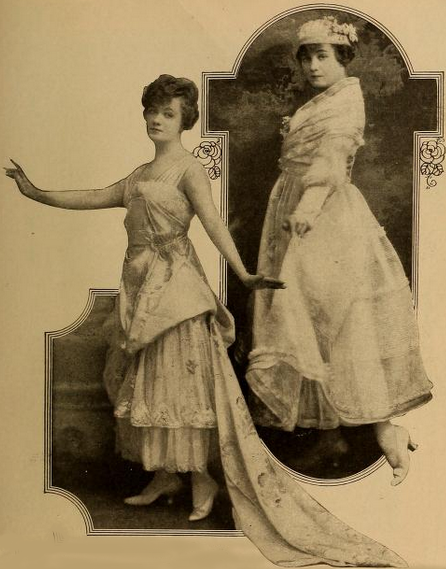
With 1916 came her biggest project to date. The 15-episode serial “The Strange Case of Mary Page” starred Mayo in the title role opposite the great Henry B. Walthall. The plot was intriguing -- Mary Page is on trial for murder, but she and her lawyer/lover are convinced she didn’t commit it -- and audiences responded favorably. The studio got scores of letters every day from fans who were convinced they had figured out the answer for the murder mystery element of the story. The series was quite an undertaking, and represented a first for Essanay, so the PR machine worked hard behind the scenes to make it a profitable endeavor. Ads were taken out in publications like McClure’s, McCall’s, Ladies World, and Pictorial Review to ensure that female audiences knew of it. They also used the elaborate, gorgeous dresses Mayo wore throughout the film as a selling point. The gowns were designed by Lucile, aka Lucy, Lady Duff Gordon, and one piece in particular reportedly carried a price tag of $1,000. If they couldn’t attract female audience members purely on plot, they thought, they might get them because of the fashions.

Edna Mayo
Edna Mayo wearing dresses created for "The Strange Case of Mary Page"

Mayo bragged that she spent nearly everything she made on clothes, and her wardrobe choices led to magazines declaring her The Best Dressed Woman on the Screen. Though she splurged on gowns, she didn’t lead a luxurious lifestyle otherwise. She divided her time between work and her apartment on Sheridan. She wasn’t married and made it clear that she had no intention of marrying. Not only were all husbands bossy, she asserted, but it would disrupt her routine. “Honestly, I don’t think I’ll ever marry. I’m so happy working, and leading my quiet little life between apartment and studio, studio and apartment. I don’t want to be upset and made unhappy -- even by happiness!”

Aside from “The Strange Case of Mary Page,” Mayo’s most interesting project of 1916 was “The Return of Eve,” released in September of that year. It featured Eugene O’Brien and was filmed around the Wisconsin Dells. It told the story of a modern day Garden of Eden, where scientists mounted an experiment that involved raising infants in the wilderness to grow up “naturally.” When the now-grown Mayo and O’Brien are brought back to civilization, they’re horrified and return to their former way of life.

The Return of Eve
"The Return of Eve" featuring Eugene O'Brien and Edna Mayo

Mayo and O’Brien received praise for their roles, but her acting opportunities began to dwindle. Rumors started to spread in mid-1917 that she had left Essanay, but she brushed them off, speaking instead of doing humanitarian work in the slums of Chicago. By December of that year, however, she was unemployed, and by January she had disappeared from the screen. A year later, she attempted to stage a comeback with the General Film Co. and “Hearts of Love,” but it didn’t work. “Hearts of Love” was her final film.

Edna Mayo

A couple years prior, Mayo had told fan magazine reporters that she had no desire to go back to the speaking stage, but it’s unclear what exactly she did do following her screen retirement. It seems her fan base and the world of film lost track of her. She appears to have moved back to California, though, and died in San Francisco in 1970.

Although Mayo was by all accounts a formidable actress, we don’t really have proof of it today. Her films are mostly considered lost, and we’re left only with plot synopses to judge her by. Still, we can’t help but hope that a copy of “The Strange Case of Mary Page” will miraculously reappear for film fans and historians alike to enjoy.

Edna Mayo

Jump over to my Pinterest page to see more of the ads for "The Strange Case of Mary Page" and other Edna Mayo pictures.

Saturday, July 27, 2013

Marguerite Clayton: The Broncho Girl of the Essanay Company

Marguerite Clayton

Marguerite Clayton never quite eclipsed her famous leading man G.M. “Broncho Billy” Anderson, but she managed keep a respectable film career alive for 15 years before retiring right around the introduction of sound. From humble beginnings, to becoming one of the most popular photoplayers in the early days of the industry, Clayton had quite a career and, fortunately for us, some of her work is still available for us to enjoy.

Marguerite Clayton

Margaret Fitzgerald was born in Ogden, Utah on April 12, 1891 (some sources say 1892) to Irish and Welsh parents. She was the third of four children born to Michael and Belle Fitzgerald, but little is known about her early years. She proudly told fan magazines that she had entered right into the motion picture industry without having done any real stage work (though later interviews dispute that). She was educated at convent called St. Mary’s in Salt Lake City and sang in the tabernacle from a young age. Her father was a mining engineer, and by 1910, the family seems to have made the move from Utah to San Francisco, where her father ran a bar.

Marguerite Clayton

Despite having no familial connection to the stage, Clayton found herself drawn to film, and began to dream of appearing on screen. When a LA-based paper ran an ad that said the western branch of Essanay was searching for actresses to join the company, she was quick to respond. In mid 1913, she joined the Essanay company doing small parts. The bit roles didn’t last long though, for after about 3 months she was starring alongside Mr. Anderson himself in his “Broncho Billy” pictures.

Marguerite Clayton and G.M. Anderson in a Broncho Billy film
Marguerite Clayton and G.M. Anderson in a Broncho Billy installment

She was inexperienced, but that seemed to play to her benefit. “I decided when I went into motion pictures that I didn’t know a thing about them, and that I would do just as the director told me. I have always followed that rule. No matter what the director says, I do it.” She was also focused on becoming a true film artiste. “I intend to keep on working until I am at the top. If I could always be sure of as good a teacher as Mr. Anderson is, I am sure I’d have no doubts of getting there.”

Marguerite Clayton and Richard Travers in "The Egg"

Clayton briefly left the company to pursue a part in a stage production called “The Candy Shop,” and later briefly left the company to pursue parts with the Liberty company. But by April of 1915, she was back at Essanay and back with Broncho Billy. Although she had grown into a western star courtesy of the Niles branch of Essanay, by late 1915, she found herself established at her new home at the Chicago branch. Rather than playing opposite the rugged G.M. Anderson, she found herself playing leads with handsome Richard Travers, and rather than playing in westerns, she found herself in dramas and light comedies. Her first role at the Chicago branch was “A Daughter of the City,” a morality play in which she played the titular role and got to show her range.

Marguerite Clayton

She was one of 12 players added to the Essanay stock company and, in 1917, one of the players who got to play in Essanay’s line of Black Cat Features -- snappy, sharp, two-reel comedy dramas that were based on Black Cat Magazine. She even starred in a unique picture where she, through some trick photography, was turned into a living doll. Despite being one of the company’s favorite and most consistent players, in late 1917, Clayton left the company to freelance with Paralta and later Artcraft, Paramount, and Paragon. In mid-1918, she made her last major picture splash with “Hit-the-Trail Holliday,” a prohibition play written by and starring George M. Cohan. She was happy with the change of scenery her parts had taken, telling fan reporters, “I wouldn’t go back into Western stuff for the world,” but her career was starting to slip.

In 1922, she sued Pathe for $50,000 in damages when she was struck by a pipe while filming. She alleged that the injury had left her with a permanent facial scar, but it’s unclear whether the case ended in a ruling or a settlement. She continued to work in film in both the US and Europe, but by the time the talkies started to take hold in the late ‘20s, she had disappeared from the screen.

Marguerite Clayton

With the ‘30s came her marriage to Victor Bertrandias, a major in the US Air Force, and her retirement from the screen. She took Victor’s last name, and, save for a few instances, managed to stay out of the spotlight. The couple were married until his death in 1961. Marguerite died seven years later.

Marguerite Clayton

The name of Marguerite Clayton never rose to the ranks of a Norma Talmadge or a Mary Pickford, but thanks to her work in the "Broncho Billy" series, she’s achieved an immortality among silent film lovers. To watch the Broncho Girl of the Essanay Company in action, check out two installments of the “Broncho Billy” series below.